
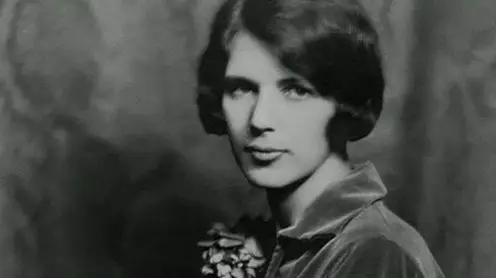
Everyone’s a critic, as the old saying goes. But even critics have their purpose in the grand scheme of media and culture. Whether it’s giving exposure to an overlooked gem, expanding the scope of a particular topic, or simply embodying the principle of free speech, critics use their voice—both literally and metaphorically—to describe the world from their own perspective, opening minds to opposing views and uniting them around common ones.
One critic that paved a path of her own was a liberated voice named Lois Long, who not only was credited with inventing fashion criticism, but climbed the corporate creative ladder to secure her place on the critical map, henceforth becoming an early yet clear example of what a woman focused on her career could accomplish. At a time when women’s voices were lost in the void, belittled, and outright ignored, Long used the opportunities around her to spread her voice and build her name for the world.
The Dawn
Born on December 15, 1901, Lois Bancroft Long had plenty of intellectual roots. Her father, Rev. Dr. William J. Long, was not only a highly educated pastor but also an accomplished author. Publishing critically acclaimed works on literature, history, and nature, Dr. Long, along with his wife Frances Bancroft Long, set an impressive precedent for their daughter Lois, so it was no surprise that the latter found her way to Vassar College in 1918. During her time there, she wrote for the Poughkeepsie Courier and served as a comic editor for the Vassarian in her final year. After graduating in 1922 with a Bachelor’s in English, Long officially relocated to New York and snagged a job as a copywriter for Vogue before becoming a staff writer and dramatic critic at Vanity Fair.
Lipstick
While Long’s career was elevating, another writer’s career was in danger of tumbling down. In February 1925, a man named Harold Ross founded a magazine called The New Yorker with his wife, purportedly to be a source of humor for New York’s upper class. But by late Spring of that same year the magazine was practically on life support––actively losing much more money than it earned. After his financial backer aided him, Ross dedicated himself to finding a group of witty humorists who could spark and sustain readers’ interest. And one such talent was Lois Long.
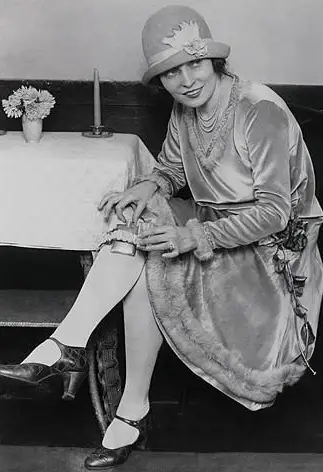
Before officially leaving her position at Vanity Fair, Long began writing a column called “When Nights Are Bold” under the pen name “Lipstick,” which detailed New York nightlife, including her reviews of speakeasies. Long, who was later described as the epitome of a flapper, led a colorful social life, making her an excellent choice for penning such commentary. Sometime after leaving her post, the column’s title was changed to Tables for Two and ran until June 1930 (or 1931, depending on the source). She also began writing a fashion column under her initials, L.L., called On and Off the Avenue, which led to her being promoted to fashion editor in 1927.
The Curtain Call
Over the decades, Long contributed to numerous works and publications, including The New York Telegraph, a 1945 book with an ex-husband, and was even under contract to Paramount Pictures for a hot minute in 1936. Her position and influence as fashion editor led to multiple radio appearances, and her overall tenure at The New Yorker lasted about 45 years, ending with her retirement in 1970. She eventually passed away on July 29, 1974, at the age of 72.
You can read snippets of her work from her home base here.
What are your views on Fashion Criticism? Did Fashion History need Lois Long? Or could it have done better without her influence? Let us know your honest thoughts in the comments below!
XOXO,
Your Fashion Bestie